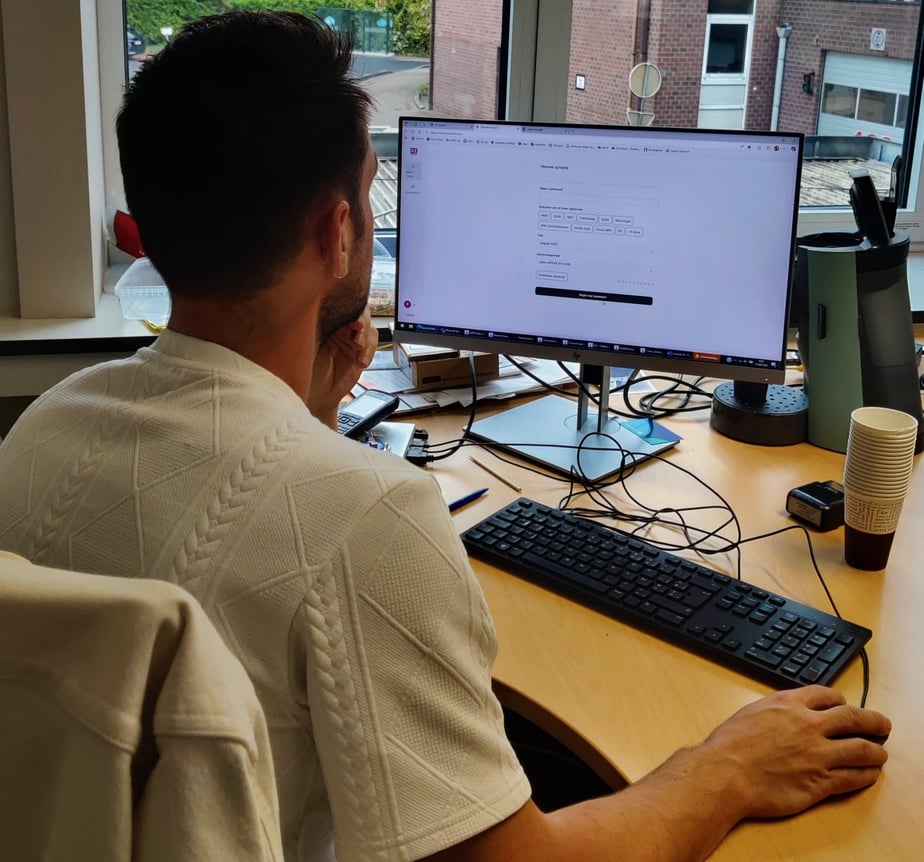
From scepticism to a standard working practice
Read how Dr. Versyck and Dr. Ceulemans transformed psychiatric consultations with SpeechAmbient.
When Dr. Versyck and Dr. Ceulemans first heard about SpeechAmbient, they were cautious. Psychiatric consultations are long, layered, and heavily dependent on nuance. Yet, they decided to give the application a chance. A few months later, SpeechAmbient has become indispensable in their daily practice.
They now use the tool consistently in both comprehensive initial consultations and shorter follow-up sessions. What began as a test has evolved into a standard way of working, centred on accuracy, time savings, and improved collaboration. The result: detailed and correct psychiatric reports, with significant time savings and always room for human oversight.
The practice context
Dr. Versyck and Dr. Ceulemans are two psychiatrists conducting outpatient consultations. Their workdays consist of a mix of long, intensive first consultations and shorter follow-up appointments. Since summer 2025, they have been actively using SpeechAmbient and regularly provided feedback on their experiences during that period.
A recognisable challenge
Psychiatric consultations are not easy to summarise. They are long, complex, and often subjective. Reporting usually happens after the consultation, requiring additional time and concentration.
Dr. Ceulemans: “I never typed during conversations. I made notes, but wrote up my reports afterwards. That often took a lot of time.”
Due to time pressure, reports were sometimes necessarily brief, even though initial consultations include many valuable details that are difficult to fully reconstruct afterwards.
The first time encountered SpeechAmbient
Their first encounter came through colleagues and an informal meeting.
Dr. Versyck: “We already knew G2 Speech through word-of-mouth. We got in touch and received a very quick response. The representatives visited us on site, and we discussed what was possible, and SpeechAmbient emerged as the best option.”
Although multiple solutions were available on the market, SpeechAmbient convinced them with its combination of ease of use and quality.
Use and implementation in practice
The setup went smoothly, with personal contact and space to test in real consultations. During the trial phase, interim evaluations were scheduled and feedback actively considered. Based on that, templates were adjusted for different types of consultations.
Dr. Versyck: “After our feedback on follow-up consultations, we literally received a new template a week later. I tested it and it works really well – fitting our needs perfectly.”
What stood out immediately
The biggest surprise was the accuracy of the reports, especially in psychiatry.
Dr. Versyck: “We were initially skeptical, especially in psychiatry. But the reports are very accurate, with a great psychiatric examination drawn from the conversation.”
Dr. Ceulemans: “It captures all the information and turns a long conversation into a very concise report that I can almost adopt verbatim, with just minor adjustments.”
Results and Benefits
The time savings are clearly noticeable. Full reports no longer need to be written after the consultation and are immediately available. Additionally, there is added value in terms of content. The reports are more detailed, better structured, and provide a solid foundation for follow-up consultations.
Dr. Versyck: “Previously, my reports were sometimes too brief. Now everything is nicely included, and I know exactly where we stand for the next conversation.”
Dr. Ceulemans: “For an initial psychiatric consultation, I could lose 20 minutes just on reporting. Now I almost fully get that time back.”
Collaboration as the key
Both psychiatrists emphasise how important the collaboration with the SpeechAmbient team has been. Feedback was quickly acted upon, leading to visible improvements.
Dr. Ceulemans: “The challenges we initially encountered were solved very quickly. Now we can use it for different types of consultations.”
Points to keep in mind
As with any AI solution, human oversight remains necessary. Occasionally, errors still occur, for example with medication or proper names.
Dr. Versyck: “You still need to check everything. But that oversight is much less than I thought would be needed.”
For fellow psychiatrists, their message is straightforward:
Dr. Versyck: “I would definitely encourage them to give it a try. I didn’t think it would work as well as it does.”
Key Takeaways
- Significant time savings, especially during initial consultations (20 minutes per session!)
- High accuracy, even in complex psychiatric conversations
- Strong collaboration with room for feedback and customisation.
SpeechAmbient captures clinical conversations and converts them into accurate, structured documentation. While you’re still having your conversation with the patient, the software listens in the background, recognises medical language, and converts the conversation into a structured report.
Download the full case study below or contact us for a demo.